The problem: a wall of power bricks
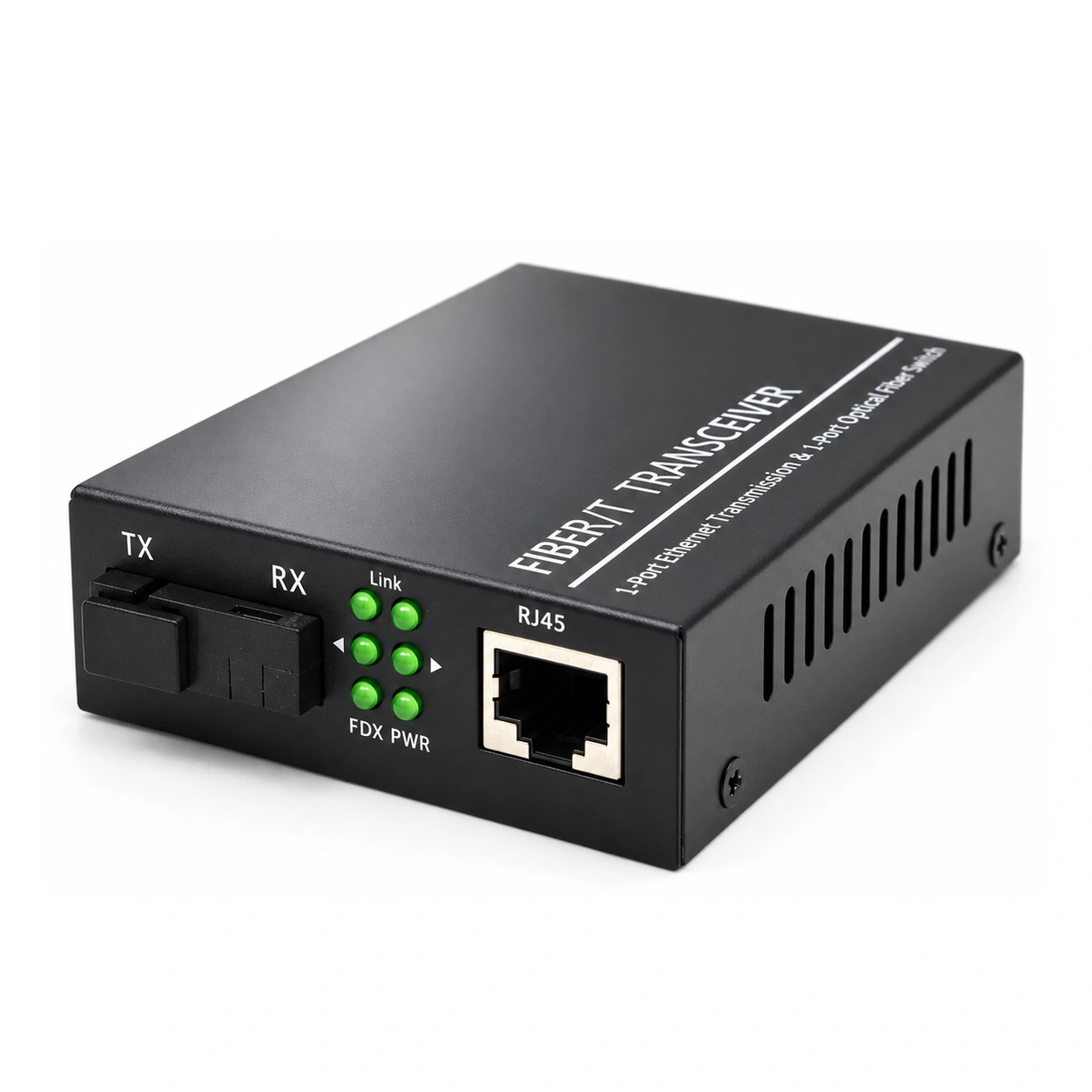
Count the failure points around ten standalone media converters on a shelf: ten wall adapters, ten mains plugs, two or three daisy-chained power strips, and a nest of cables nobody dares to touch. Each adapter is a transformer that warms, ages and dies quietly; each plug can work loose. When a floor switch room looks like that, the real cost is not the adapters — it is the hour the whole floor goes dark because one plug fell out of an overloaded strip.
What a 2U chassis actually replaces
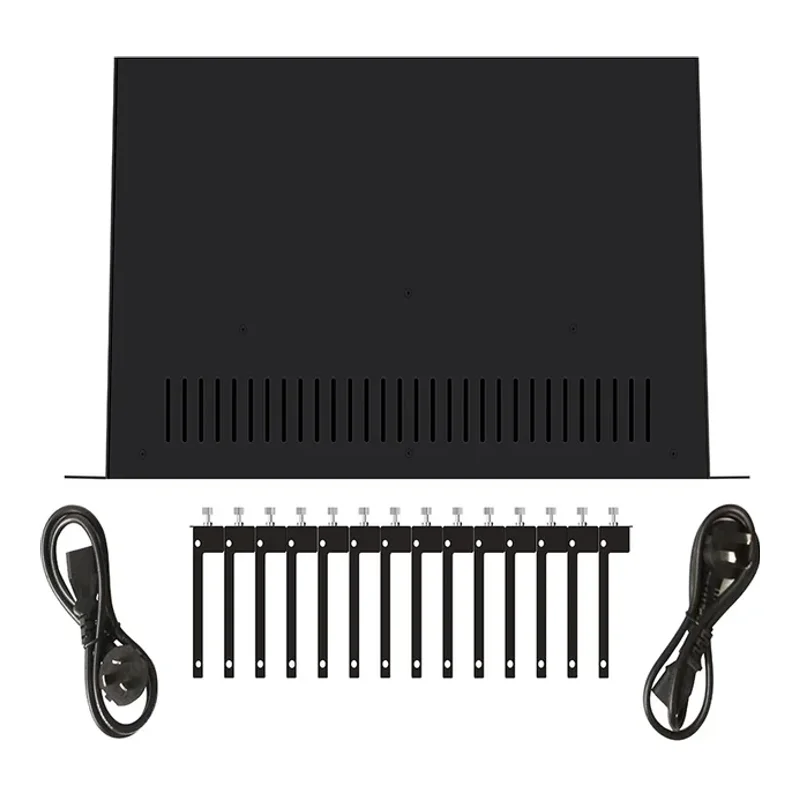
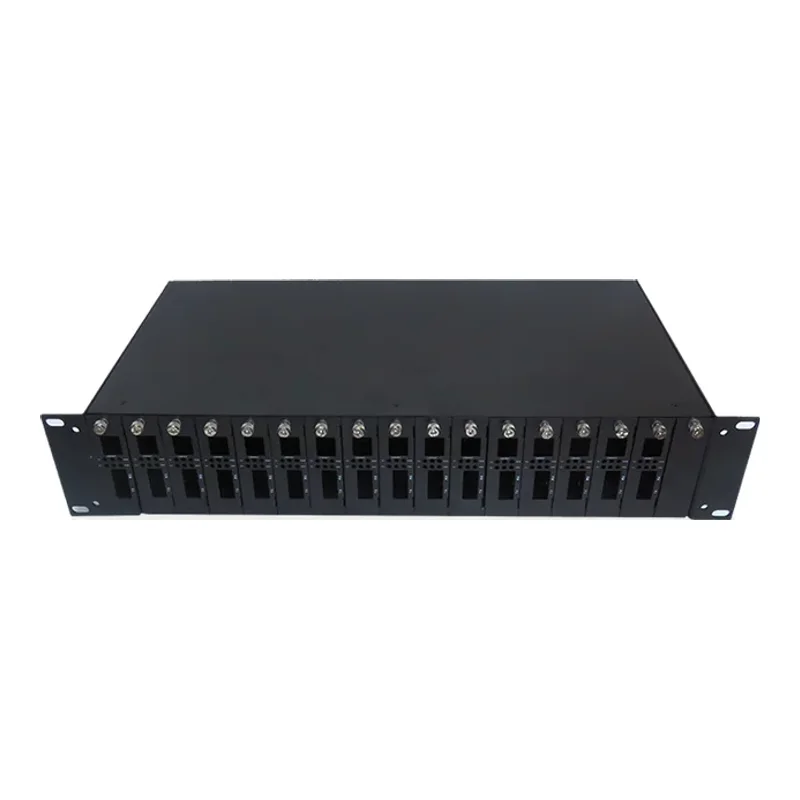
A rack-mount chassis centralizes compatible converter modules and their power in a defined rack space. Before reusing standalone converters, confirm the chassis-approved models and hardware revisions, DC voltage, per-slot current and mounting parts. Card-based and standalone-style systems can differ. Verify the exact chassis dimensions and power specification rather than assuming one common platform.
Dual power supply: the feature you only miss once
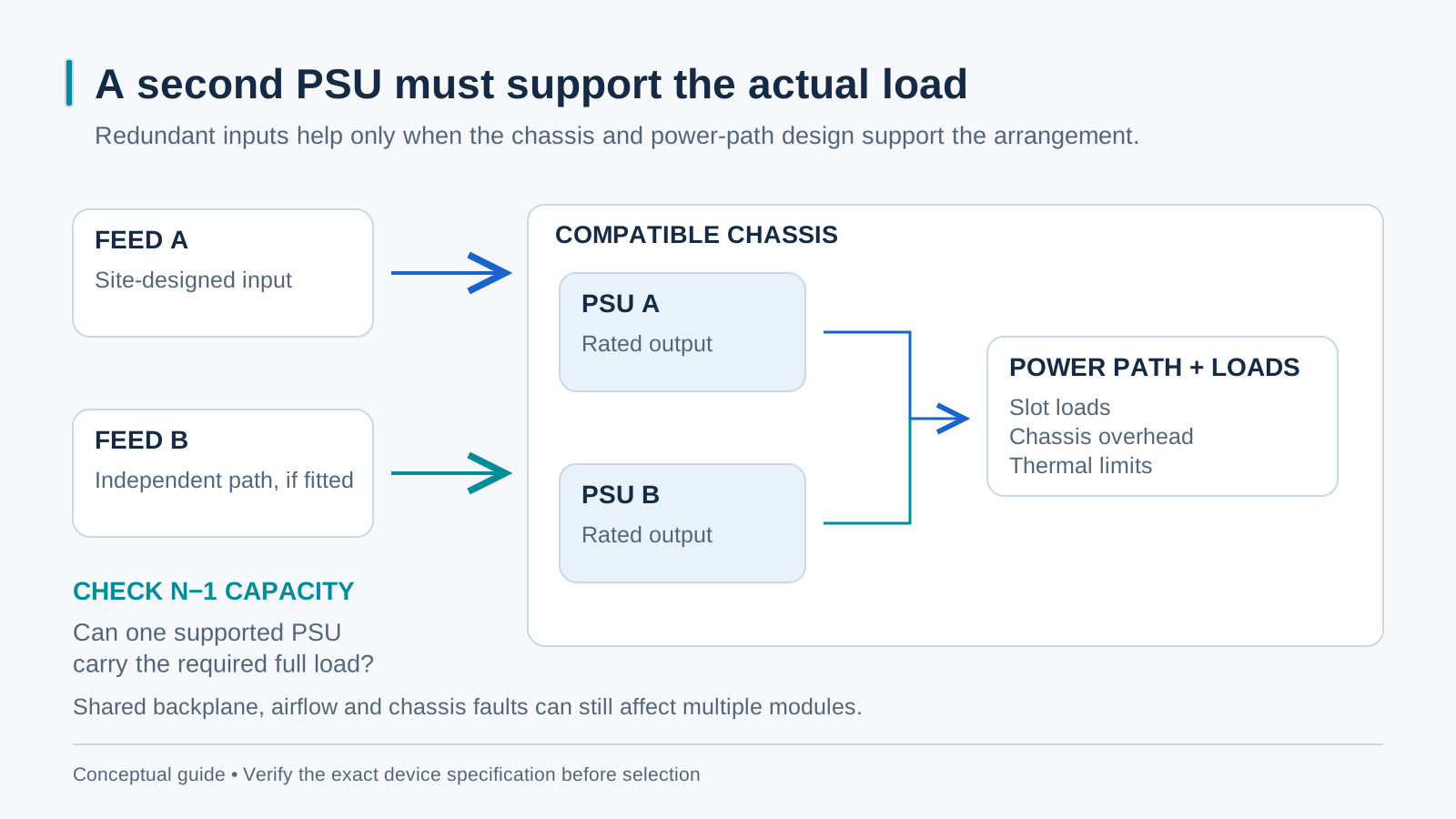
An installed, supported redundant PSU can reduce the effect of one supply failing. Confirm that the remaining supply can carry the required load and whether supply replacement is hot-swappable. Independent A/B feeds require a suitable site electrical design; do not interconnect phases. Shared chassis components can still be common failure points, so dual supplies do not guarantee uninterrupted service.
14-slot standalone or 16-slot card-based?
Choose a standalone-style chassis only where your converter models and mounting kits are explicitly compatible. A card-based chassis may suit a new deployment or higher density, but needs the matching modules and spares. Compare supported module types, power limits, cooling and maintenance procedures rather than assuming the two chassis designs are interchangeable.
What a well-built shelf looks like
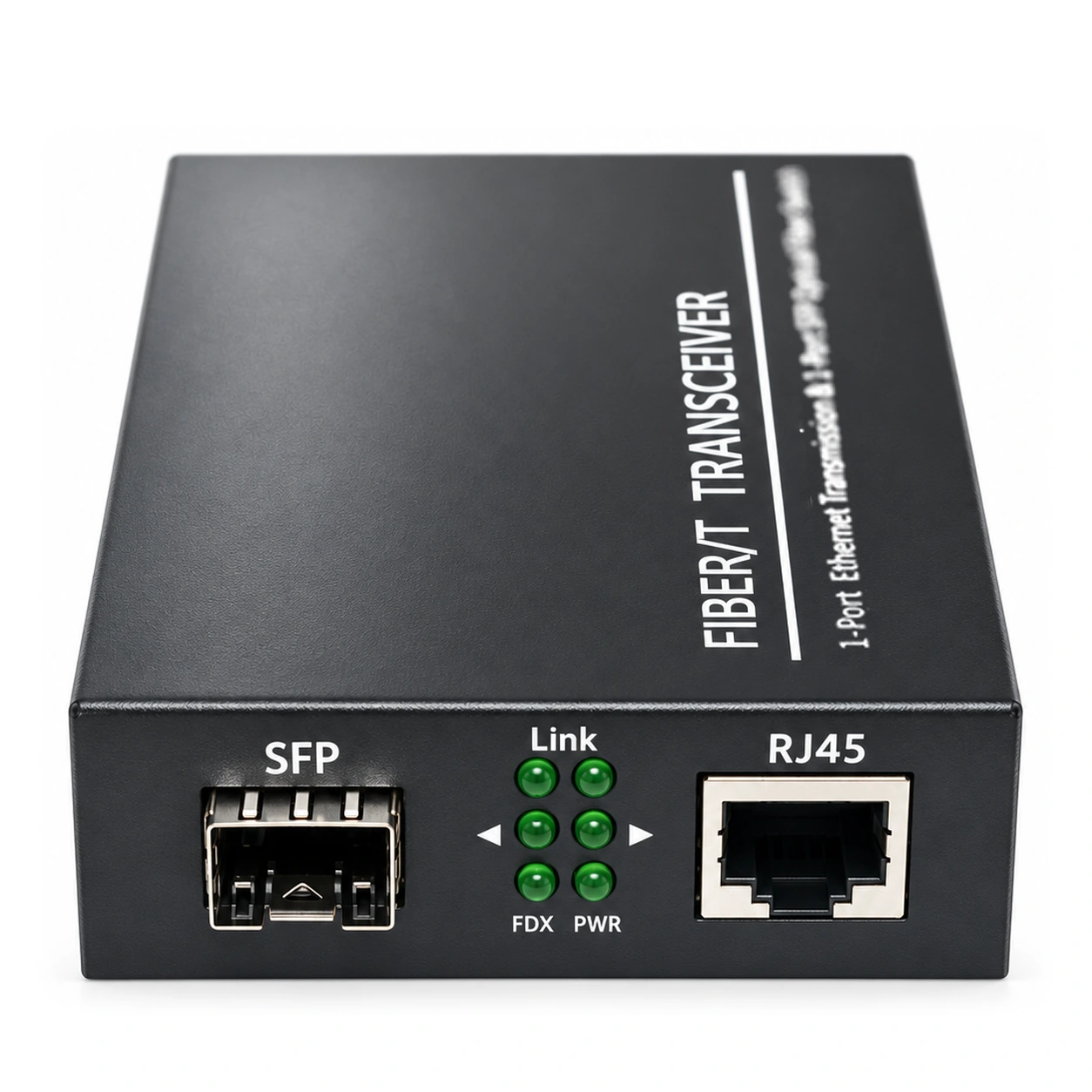
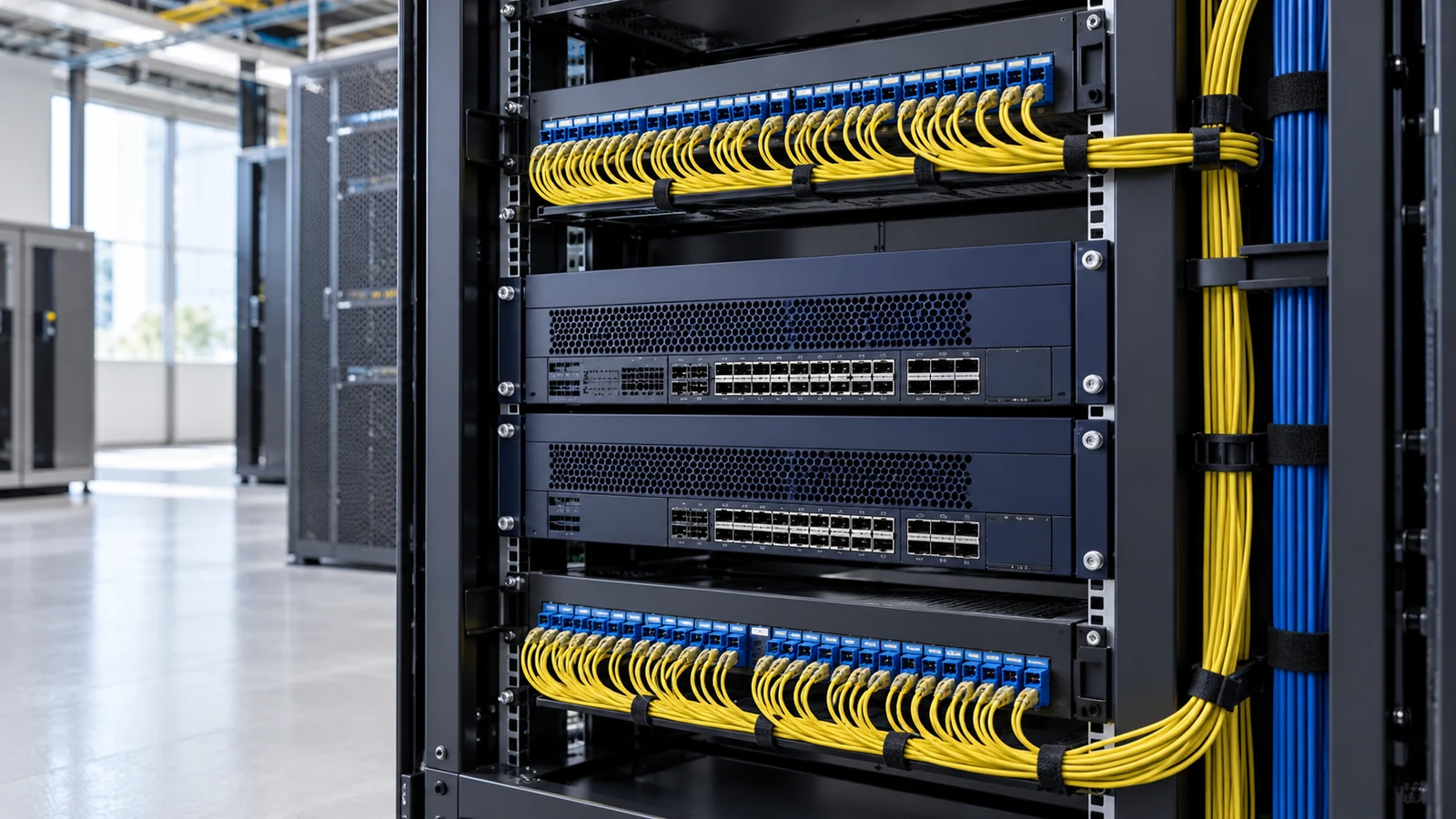
A well-planned rack makes link labels, ports and status indicators accessible and provides suitable patching and cable management. Pair each converter with compatible equipment at the far end. Calculate the total rack space from actual component heights: a 2U chassis plus a 1U patch panel and a 1U switch already occupies 4U before any additional clearance.
Operation and maintenance in one place
Racking concentrates everything a technician touches: labels read left to right in slot order, LEDs line up in one view, and a failed converter is swapped without unplugging anything else. Dusting and inspection happen on one shelf instead of a walk around the room. When you extend the network, you add a converter and a slot number to the label map — no new power strip, no new adapter, no crawling under a desk. That discipline is what keeps ten-year-old installs serviceable.
When a rack is not worth it
With only a few converters, individual supplies can be a practical choice. Compare chassis cost, compatible spares, power resilience, maintenance access and expected service effort for the site. The financial break-even depends on those assumptions; avoided site visits are a possible benefit, not a guaranteed payback.