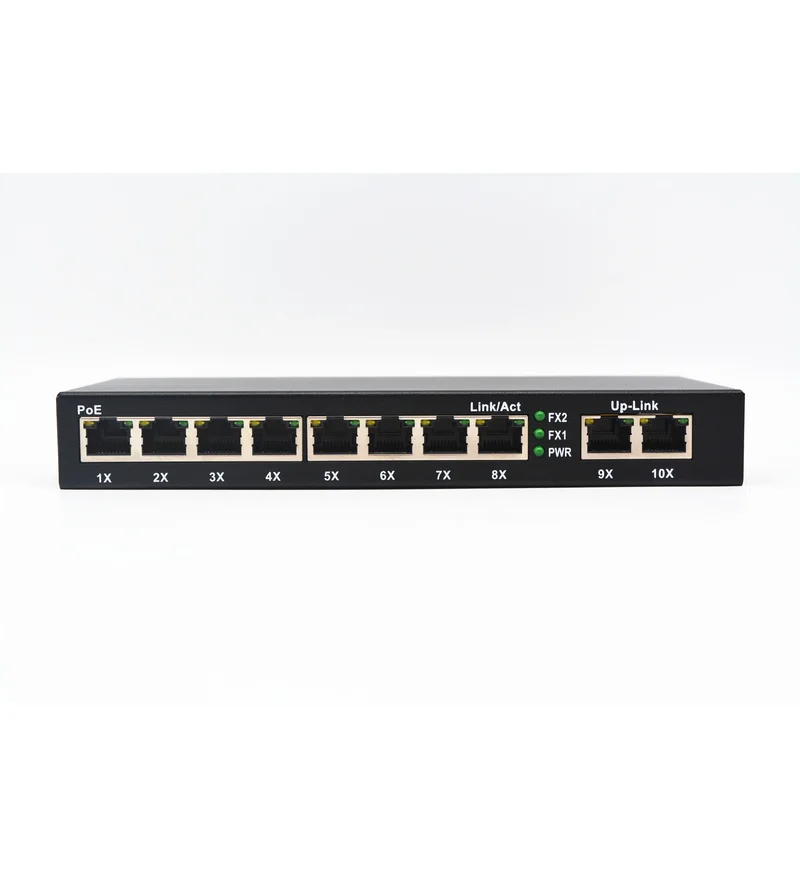
Choose a PoE switch by the installation requirements and verified model specifications. “Industrial” is a useful product category, but it is not a universal temperature range or a fixed list of features.
Compare the limits that affect the site
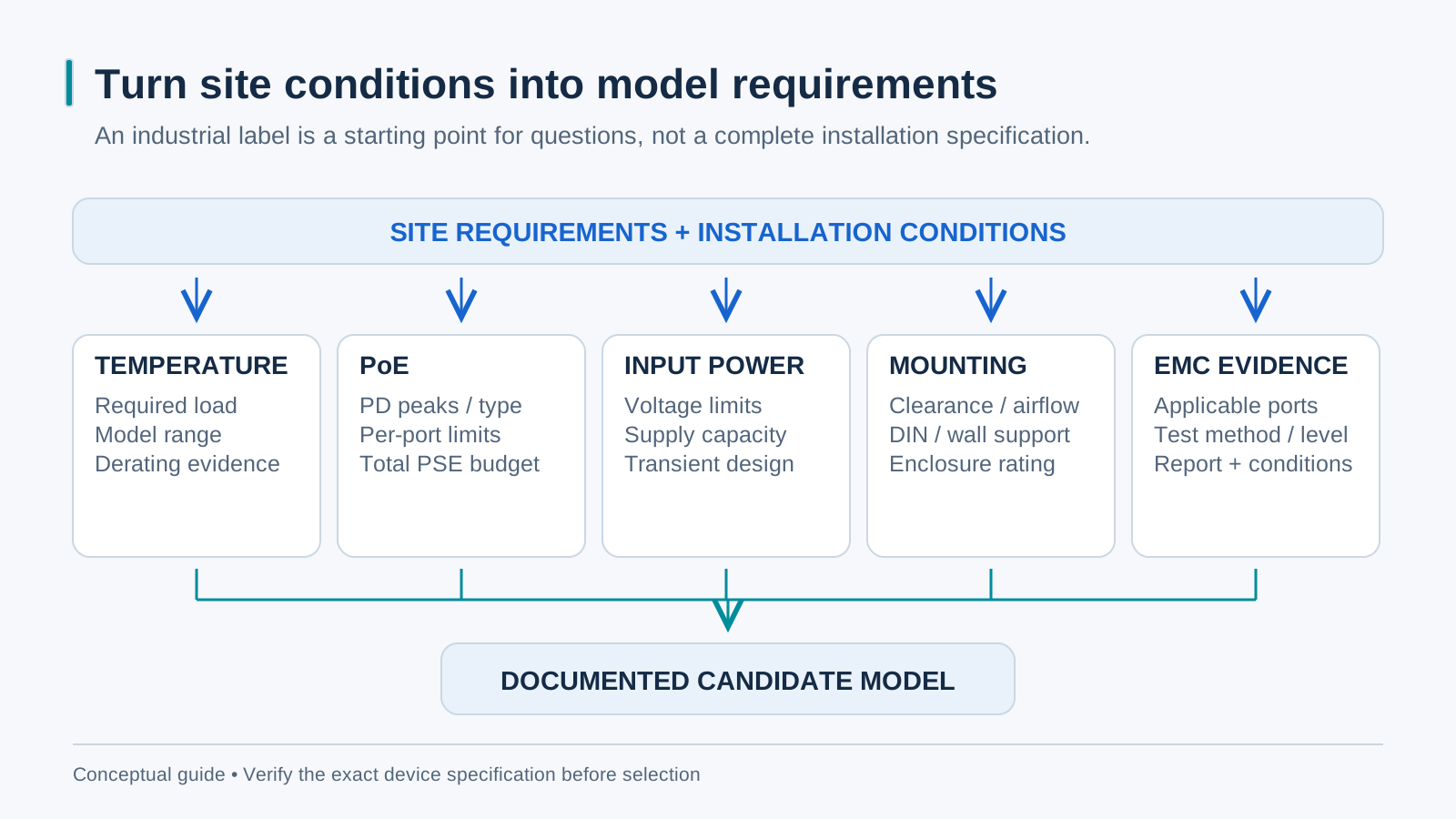
Check operating temperature at the specified load, mounting method, humidity limits, vibration requirements and the permitted power inputs. DIN-rail mounting and dual inputs are common options, not features every industrial switch includes. Two inputs also do not create independent power sources unless the upstream design provides them.
Check the PoE standard, available power per port and total budget at the planned input voltage and temperature. The port count alone cannot show whether every connected camera will receive its required power. Manufacturer documentation can specify different total budgets for different input voltages.
Read surge claims at the port level
IEC 61000-4-5 defines surge immunity test methods and levels. Ask which power and signal ports were tested, the applied levels and coupling modes, and the performance criteria used. A reference to the standard alone is incomplete. Equipment immunity is one part of a coordinated grounding and surge-protection design.
Use commercial equipment where its limits fit
An indoor, conditioned cabinet may be well served by a commercial model whose environmental, PoE and performance specifications meet the requirement. An outdoor installation needs a suitable enclosure and a site assessment even when the switch is industrial-rated. The product category does not make an exposed device weatherproof.
For a meaningful comparison, prepare a camera load list, enclosure temperature range, input-power details and mounting requirements. Request two model-specific quotations against the same checklist. Do not pay for an “industrial” label without evidence, or assume the lower-priced option is unsuitable without checking its limits.