Why the QC conversation matters more than the price sheet
Two factories can quote the same converter within a dollar and deliver completely different field outcomes. The difference lives in three unseen processes: burn-in duration, optical test coverage and how defects are handled after shipment. A price sheet tells you what the unit costs; the QC answers tell you what it will cost you in truck rolls, replacements and reputation with your own customers. Ask these questions before any PO — the supplier's reaction speed to technical questions is itself a quality signal.
Question 1 — What burns in, and for how long?
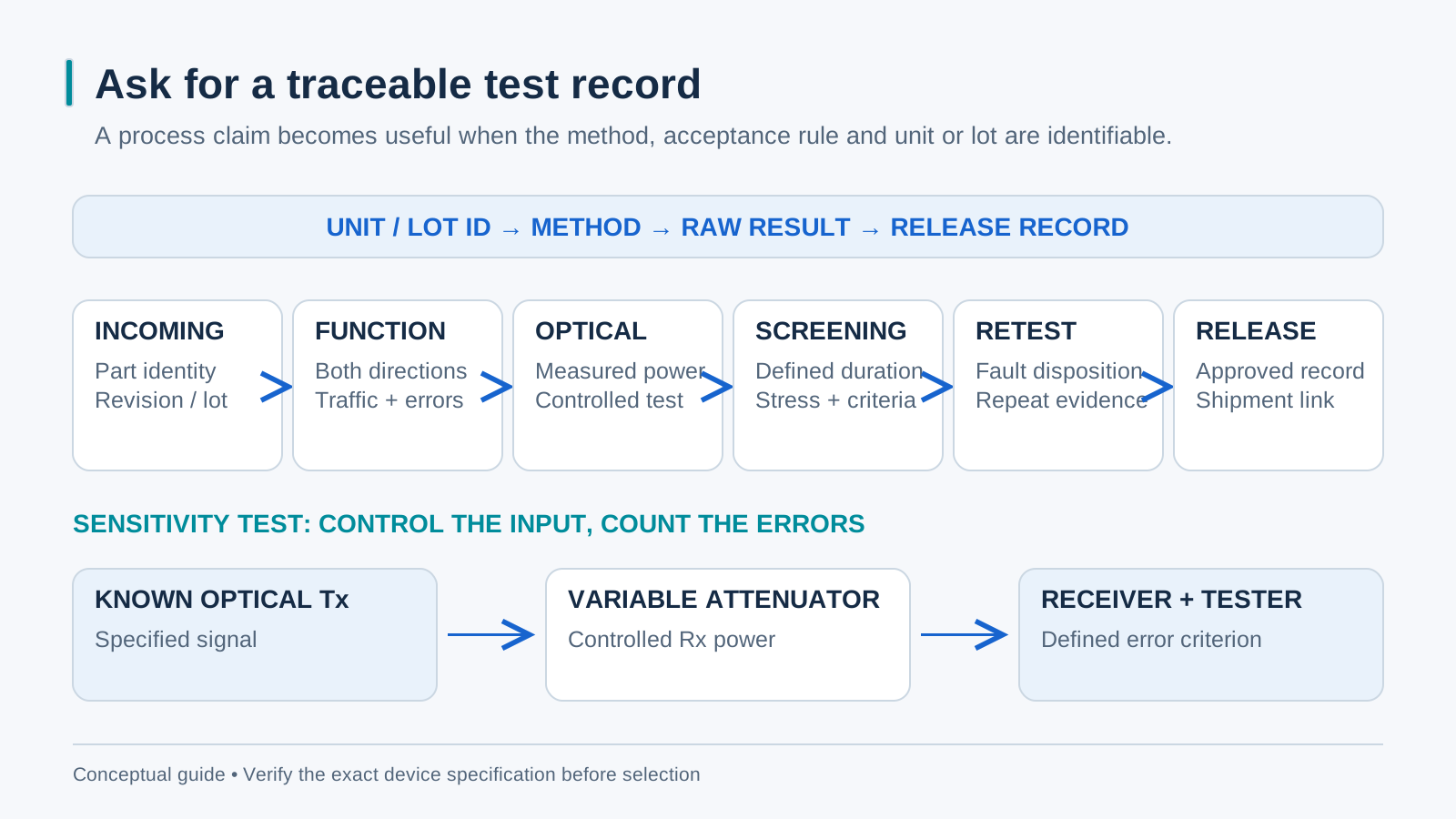
Ask for the documented screening plan: duration, temperature, electrical and traffic load, acceptance criteria, coverage and serial-number records. No single burn-in duration proves quality for every network device. A factory visit or video can help confirm that the stated process exists, but operating conditions and recorded results matter more than a universal 24-hour threshold.
Question 2 — What exactly does your optical test cover?
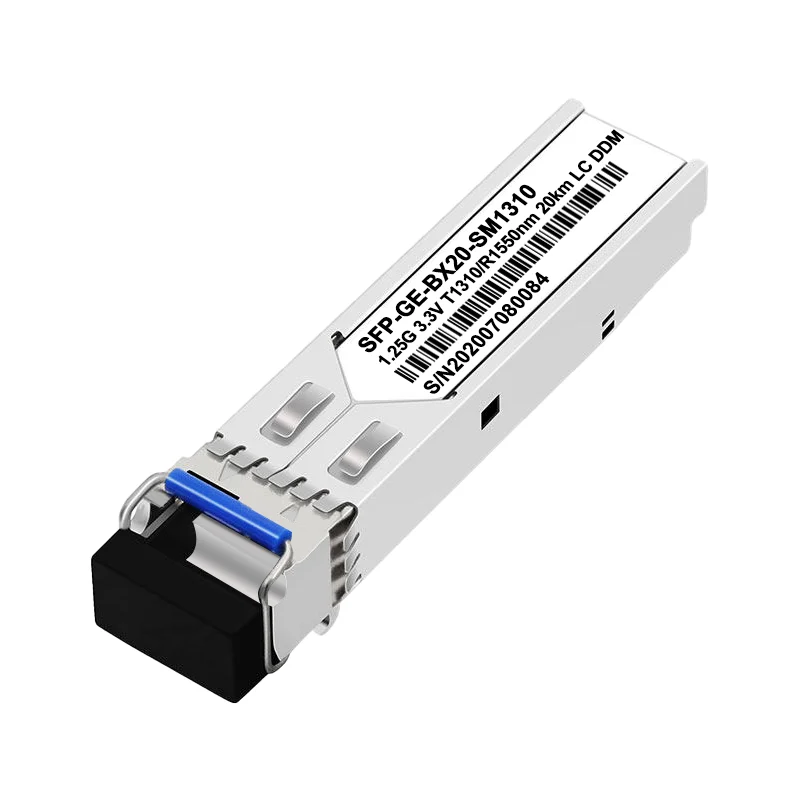
Ask whether every unit is checked in both traffic directions and what parameters and acceptance criteria are recorded. DDM logging is not a receiver-sensitivity test: sensitivity verification needs controlled received power and a defined error-rate criterion. Request instrument calibration information, traceable results and the policy for failed or marginal units, including documented corrective action and requalification.
Question 3 — What arrives with the shipment?
Acceptable answer: per-batch QC report with test statistics, serial-number ranges, and sample DDM records — not just a packing list. For OEM orders: your logo proof, manual version and packaging photos before dispatch. This paperwork costs the factory minutes and saves you weeks when a dispute or customs query appears; a supplier who resists putting QC records in writing is telling you how they behave when something goes wrong. Ask also what is NOT included: dust caps, velcro, mounting ears and terminal blocks are the four accessories that mysteriously vanish between quotes and delivery.
Question 4 — What happens when something fails in the field?
Request written warranty terms covering the start date, exclusions, evidence requirements, named RMA contact, freight responsibility and replacement or credit timetable. Do not assume that a stated number of years or a next-shipment replacement is an accepted policy. Agree the terms for the actual order and keep them with the purchase records.
The two-minute supplier test
Send the same technical questions to shortlisted suppliers and assess the quality of the answers and evidence. Response speed can inform service expectations, but does not establish whether a supplier owns a factory. Verify legal identity, production capability, test records and references separately.