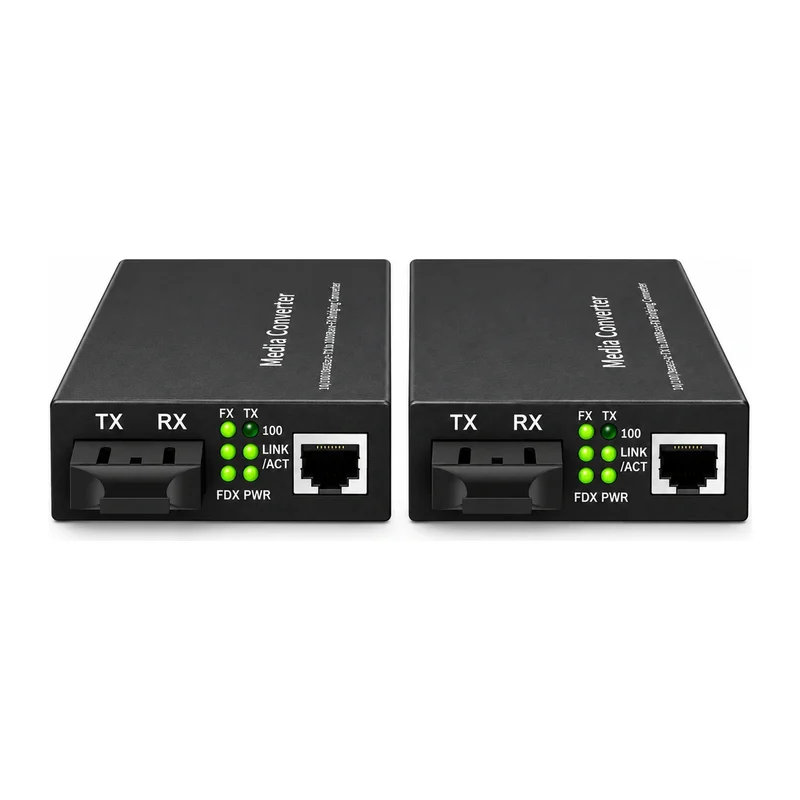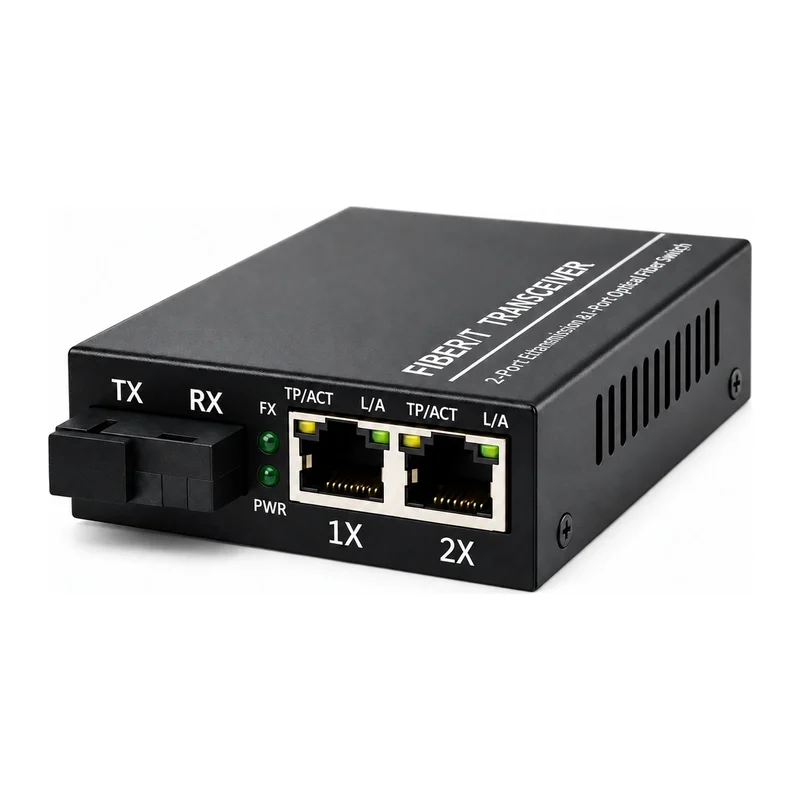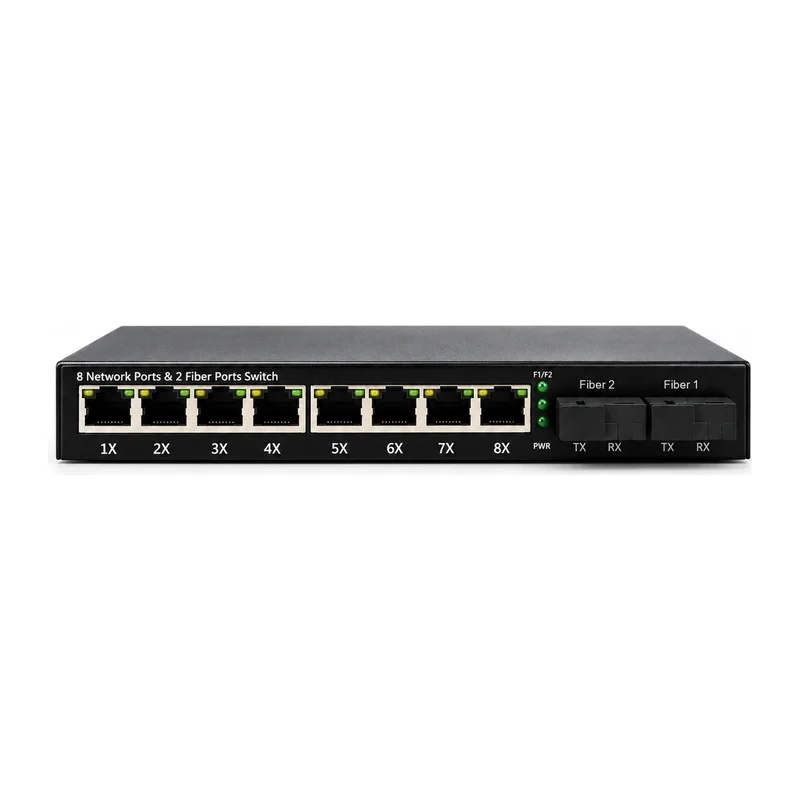
Similar enclosures can contain different interfaces, power designs and optical options. A useful comparison starts with an agreed specification, not a price gap or an assumed quality tier.
Make the technical scope comparable
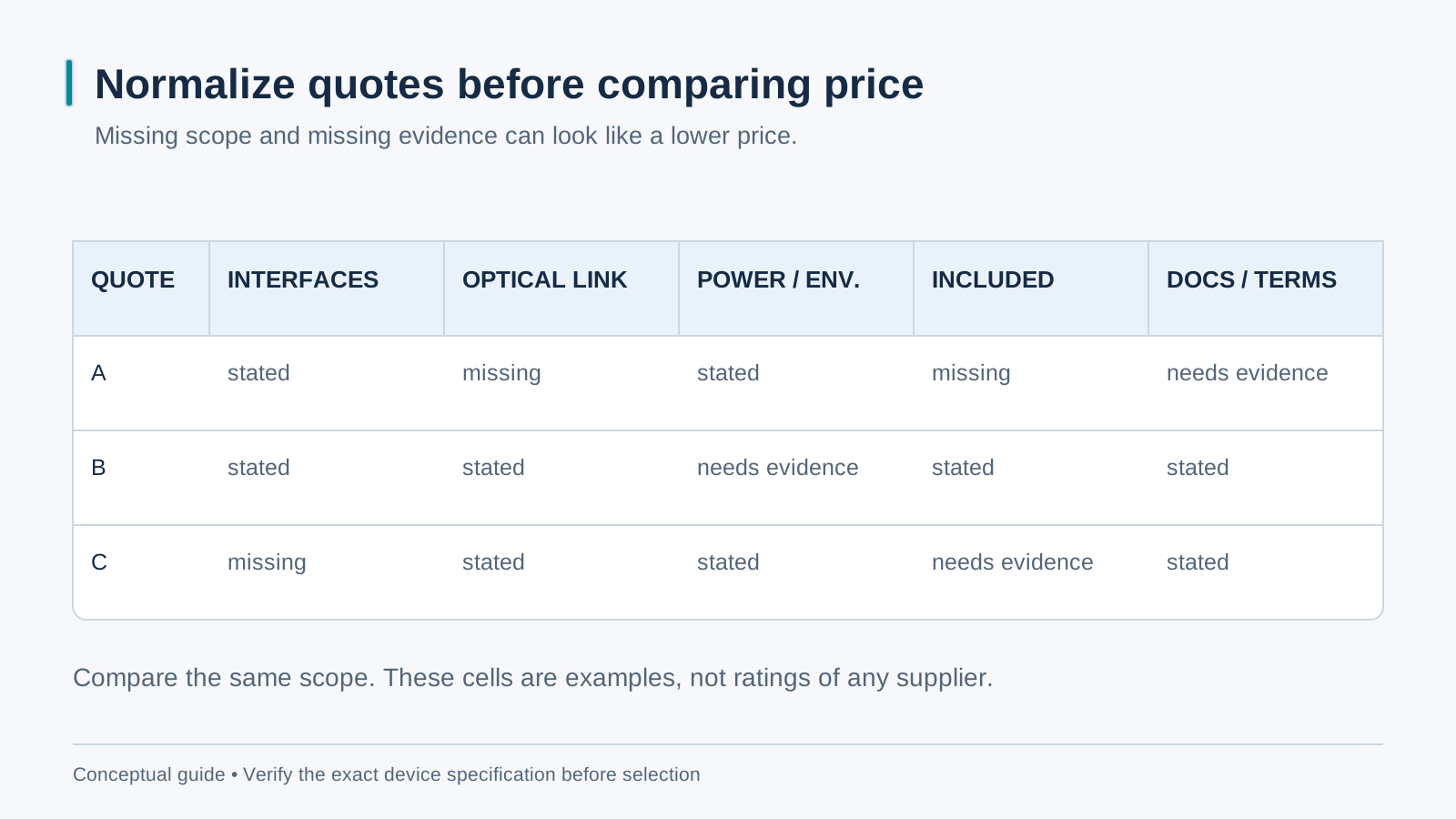
Ask each supplier to state the copper and optical interface speeds, forwarding behavior, connector type, fiber type and power requirements. Compare performance evidence under the same test conditions, including frame sizes and offered load. A chipset name or optical package alone does not establish throughput: “1×9” describes an optical transceiver package style.
For the optical link, match wavelength, transmit and receive limits, connector polish and the planned fiber loss. A distance label is not a substitute for a link budget. Specify whether optics, power adapters, mounting accessories and patch cords are included.
Compare documents and commercial scope
Request model-specific conformity documentation appropriate to the destination market. CE marking, FCC authorization and RoHS requirements are different matters; they should not be presented as interchangeable certificates or a guarantee of customs clearance. The EU declaration of conformity and supporting technical evidence matter more than an unexplained certificate logo.
Then compare quantity, currency, included accessories, lead time, quotation validity, agreed delivery term and written warranty scope. These are procurement checklist items; the quotation and agreed terms determine what is supplied.
Use one comparison sheet with an “evidence provided” column and an “open questions” column. A remaining price difference may reflect order size, logistics, support or specification differences. It cannot be attributed to margin alone.