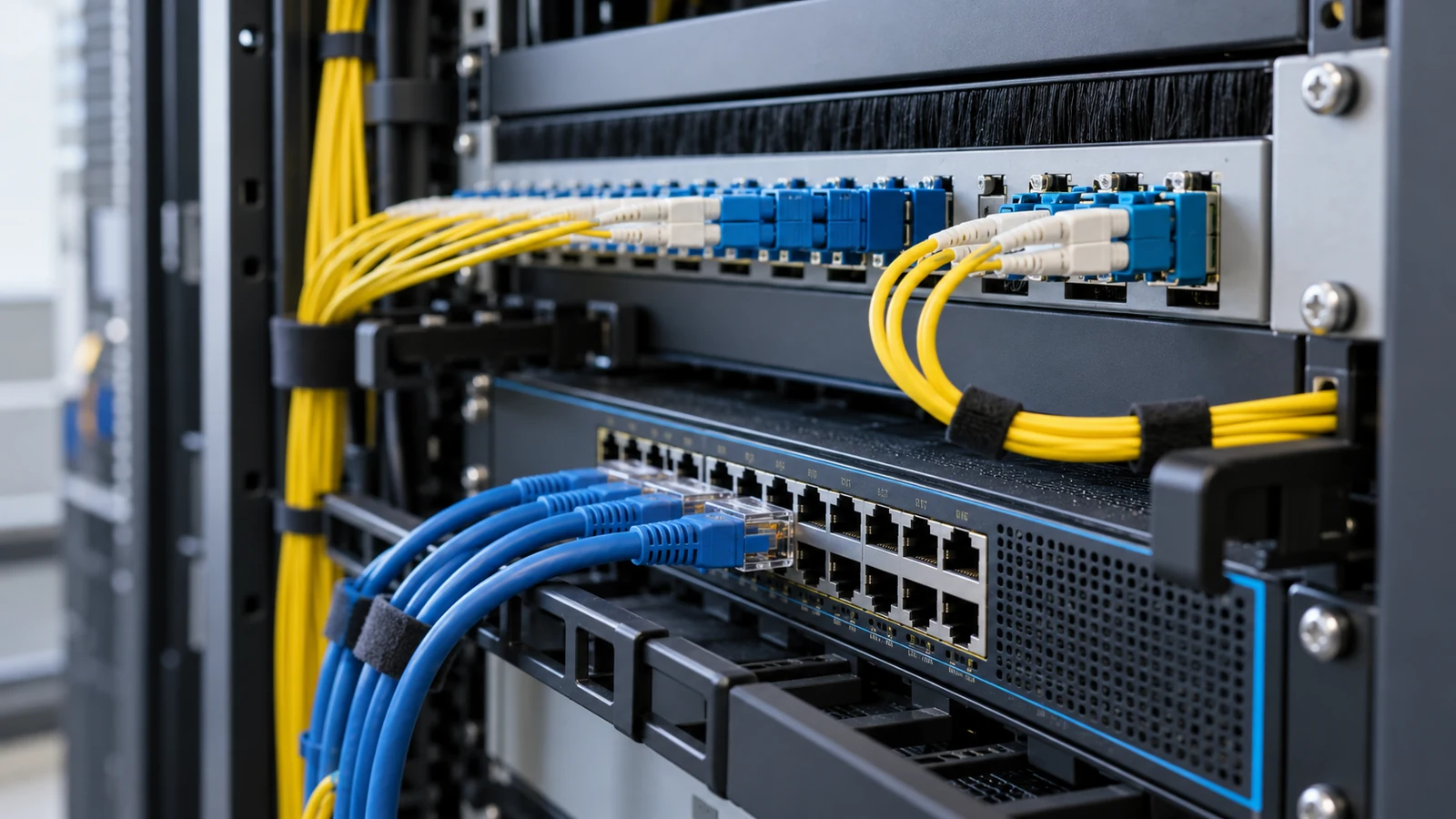
What "100M" and "Gigabit" actually mean
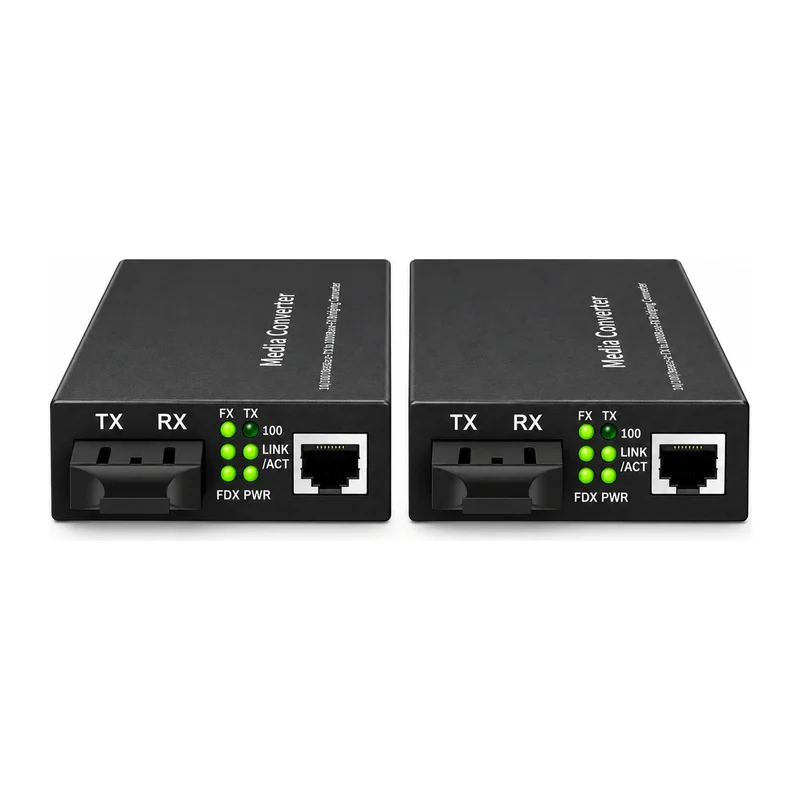
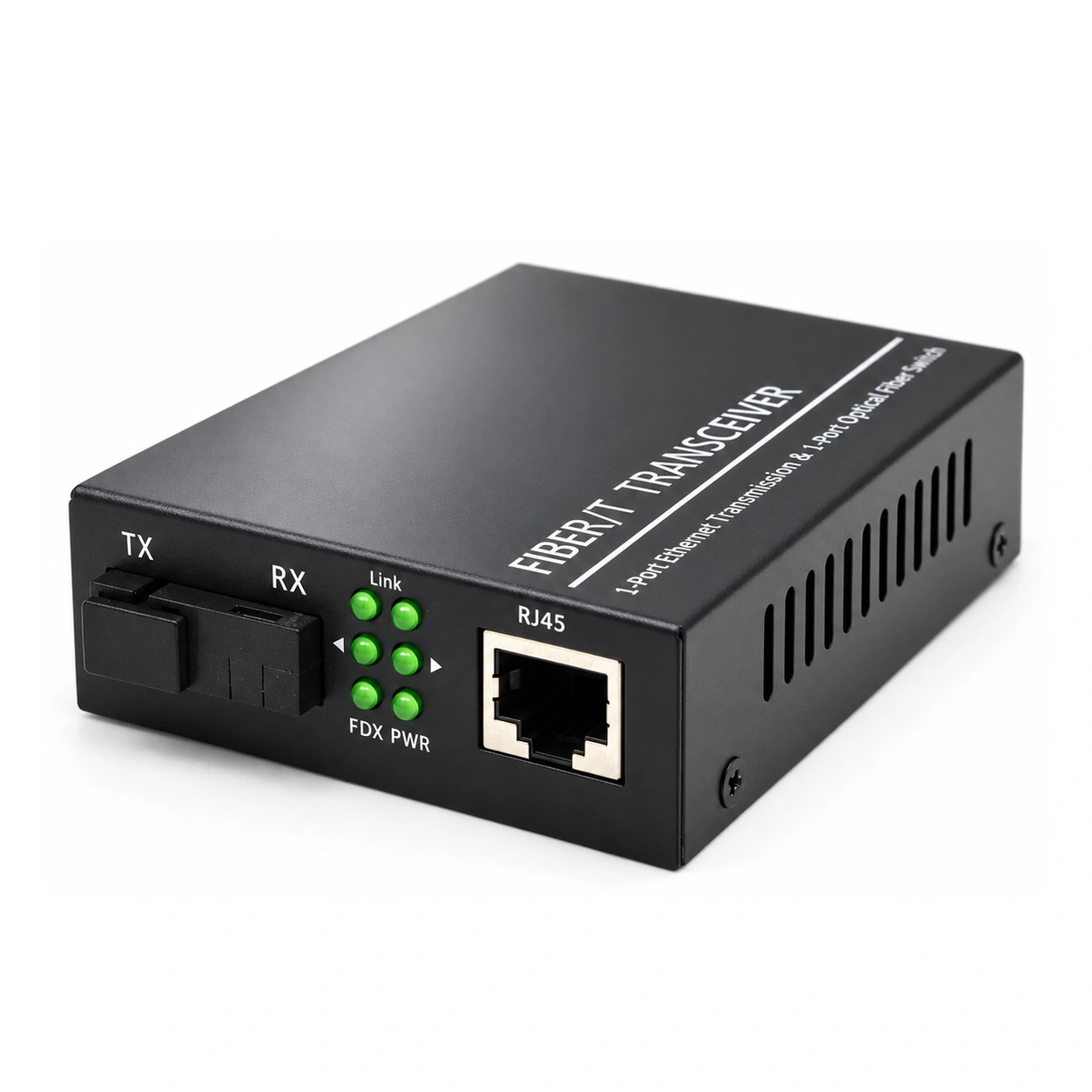
Fast Ethernet (100BASE-TX) carries up to 100 Mbps on the copper side; Gigabit Ethernet (1000BASE-T) carries up to 1,000 Mbps. The fiber interface must be checked separately: Fast Ethernet and Gigabit converters may use different optical protocols and line rates. A shared SFP form factor does not make FE and GE optics interchangeable. Confirm both optical endpoints and whether the converter explicitly supports rate conversion.
Where 100 Mbps is still the right choice
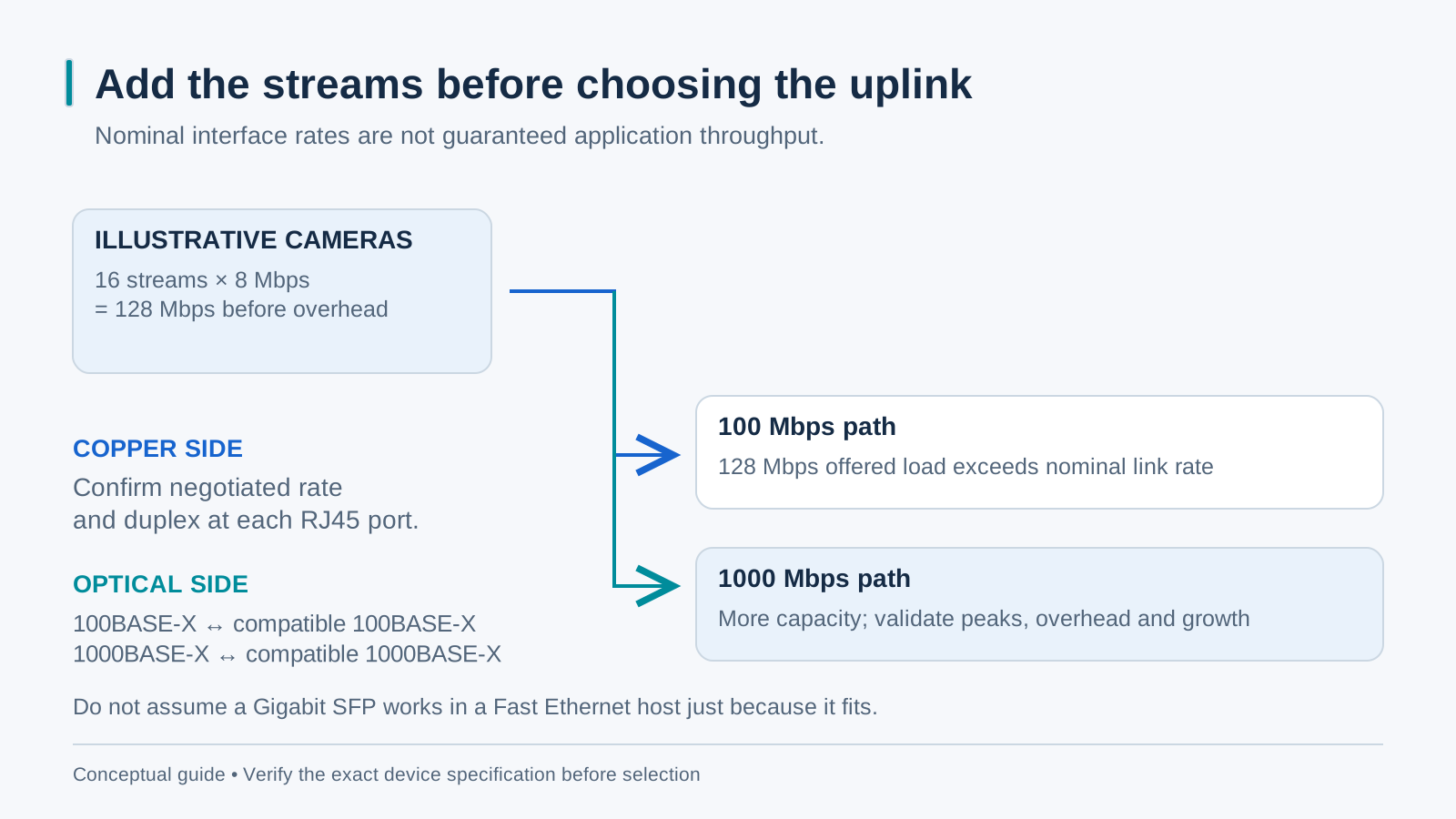
A camera’s bitrate depends on codec, resolution, frame rate, image settings and scene activity. Sixteen cameras at 8 Mbps already total 128 Mbps before overhead, so camera count alone cannot justify a 100 Mbps uplink. A Fast Ethernet link can still suit a limited, measured load. Compare configured or measured peaks, concurrent streams and growth with the capacity of the selected converter or switch.
When you must go gigabit
Gigabit is useful where traffic or endpoint capability requires it, particularly at aggregation points and high-throughput access points. A compressed 4K camera does not automatically require a Gigabit port. Check the actual device interface and total traffic, including recording, live viewing, playback and other applications, before choosing port and uplink speeds.
Mixed-speed copper and fiber links
A supported rate-converting Gigabit converter may negotiate a lower copper rate for a 100 Mbps camera while maintaining a compatible Gigabit optical link. Other converters have fixed or more restricted rates. Verify the exact copper negotiation modes and fiber protocol for the selected model, and make both optical endpoints compatible. A 100 Mbps copper interface remains a throughput limit even when the fiber side is faster.
Bottleneck math for a camera network
Oversubscription should be evaluated from traffic measurements, not port labels alone. Eight cameras producing 40 Mbps in total place a different load on an uplink from eight fully utilized 100 Mbps ports. Add concurrent streams and other traffic, check bursts and packet loss under representative conditions, and document a growth allowance. There is no universal requirement to provide four times the measured peak.
Choosing between our SKUs
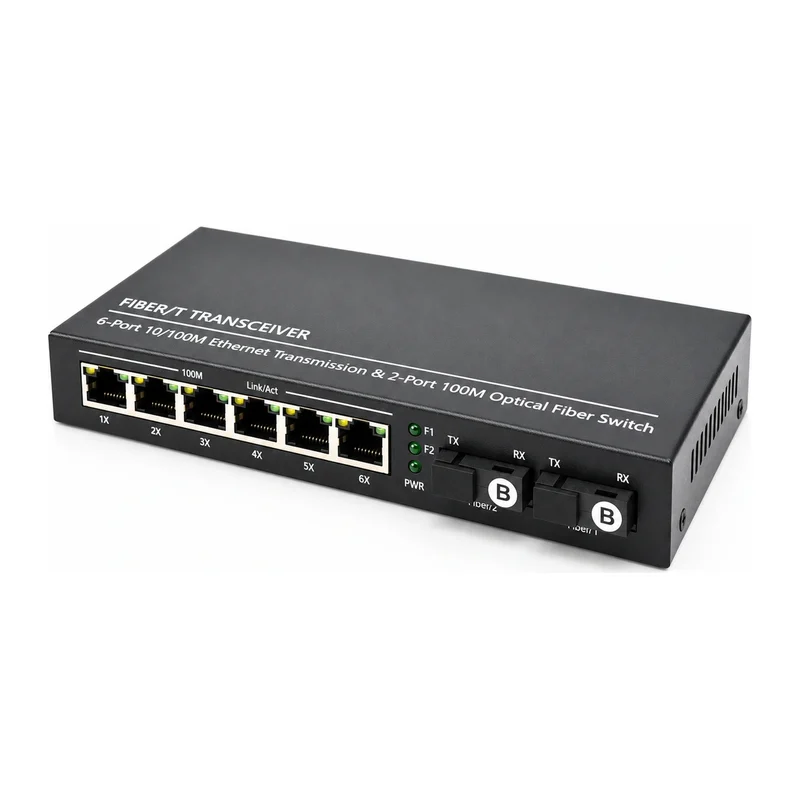
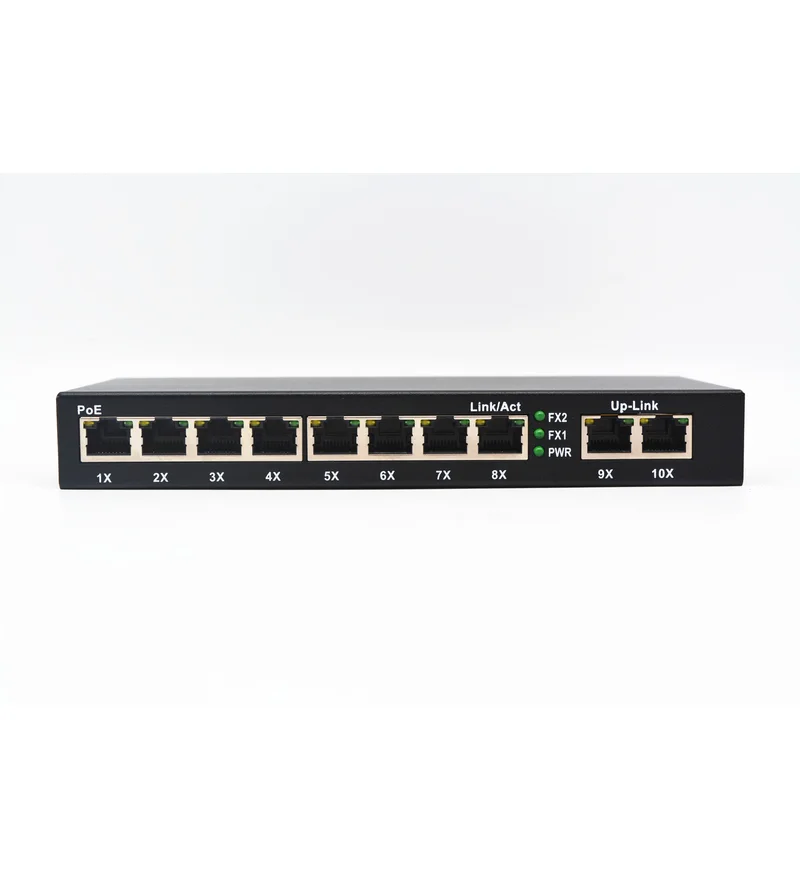
Use the exact product specification to select a Fast Ethernet or Gigabit converter or switch. Then select compatible optical modules at both ends, checking host support, optical protocol, fiber type, wavelength and power limits. A module that fits a slot is not automatically supported, and a 20 km label alone does not establish FE/GE interoperability.
Future-proofing advice
Pull suitable fiber and size the pathway for future needs. Where present traffic fits within Fast Ethernet, retaining 100 Mbps equipment may be reasonable. A later upgrade may reuse the fiber after its type, route loss and condition are checked, but can require new compatible converters, switches and optics. Review uplink utilization as the network grows.