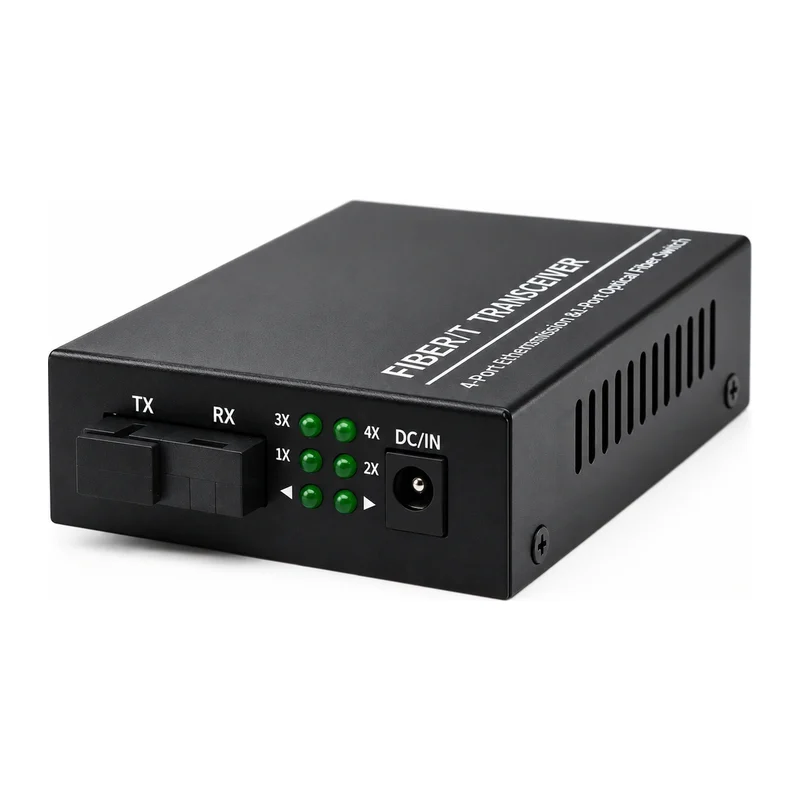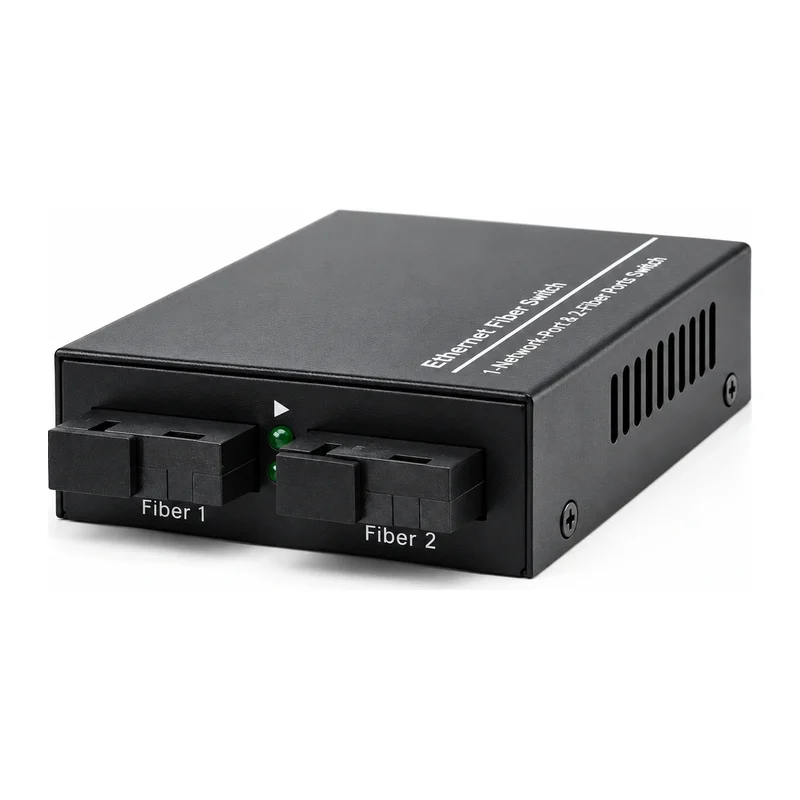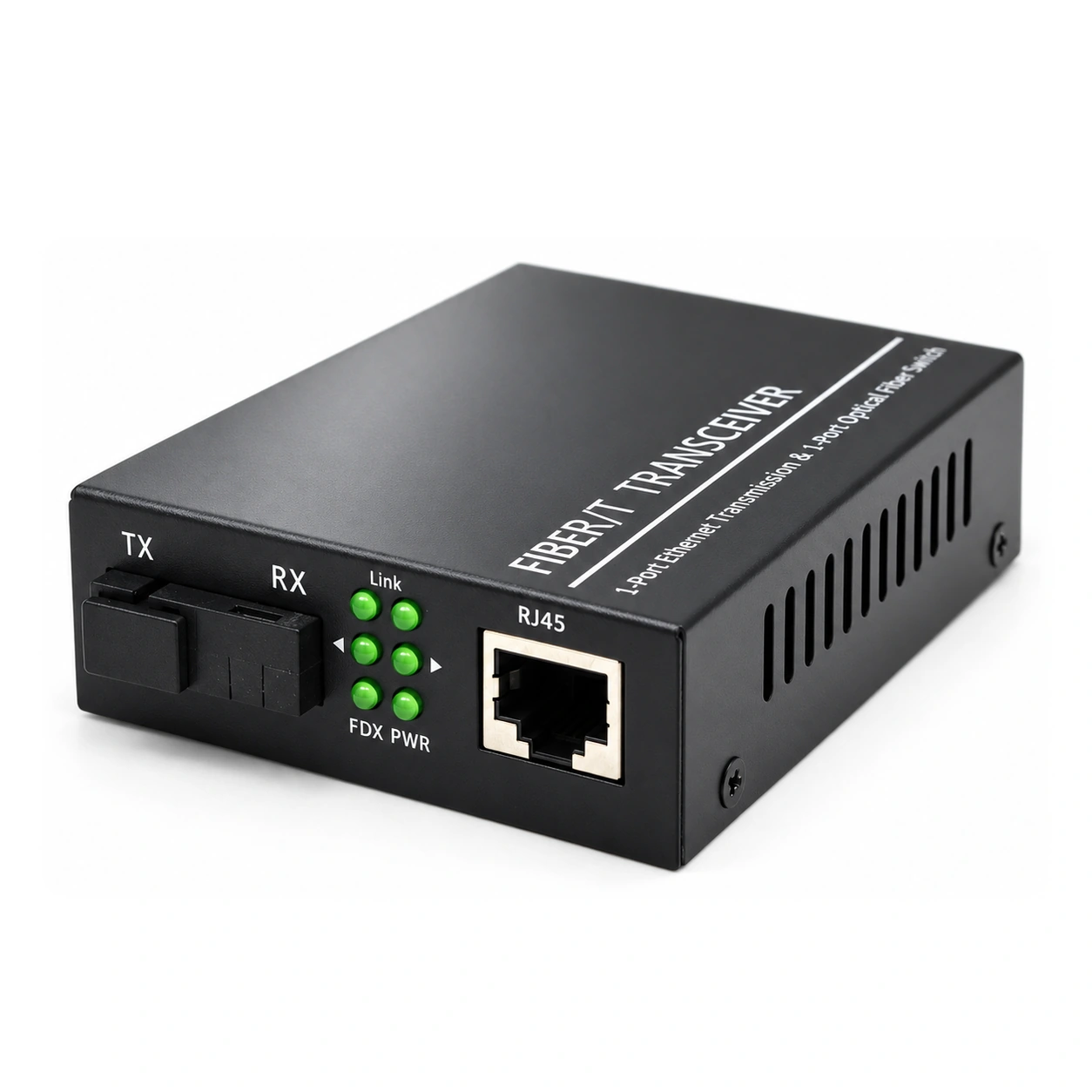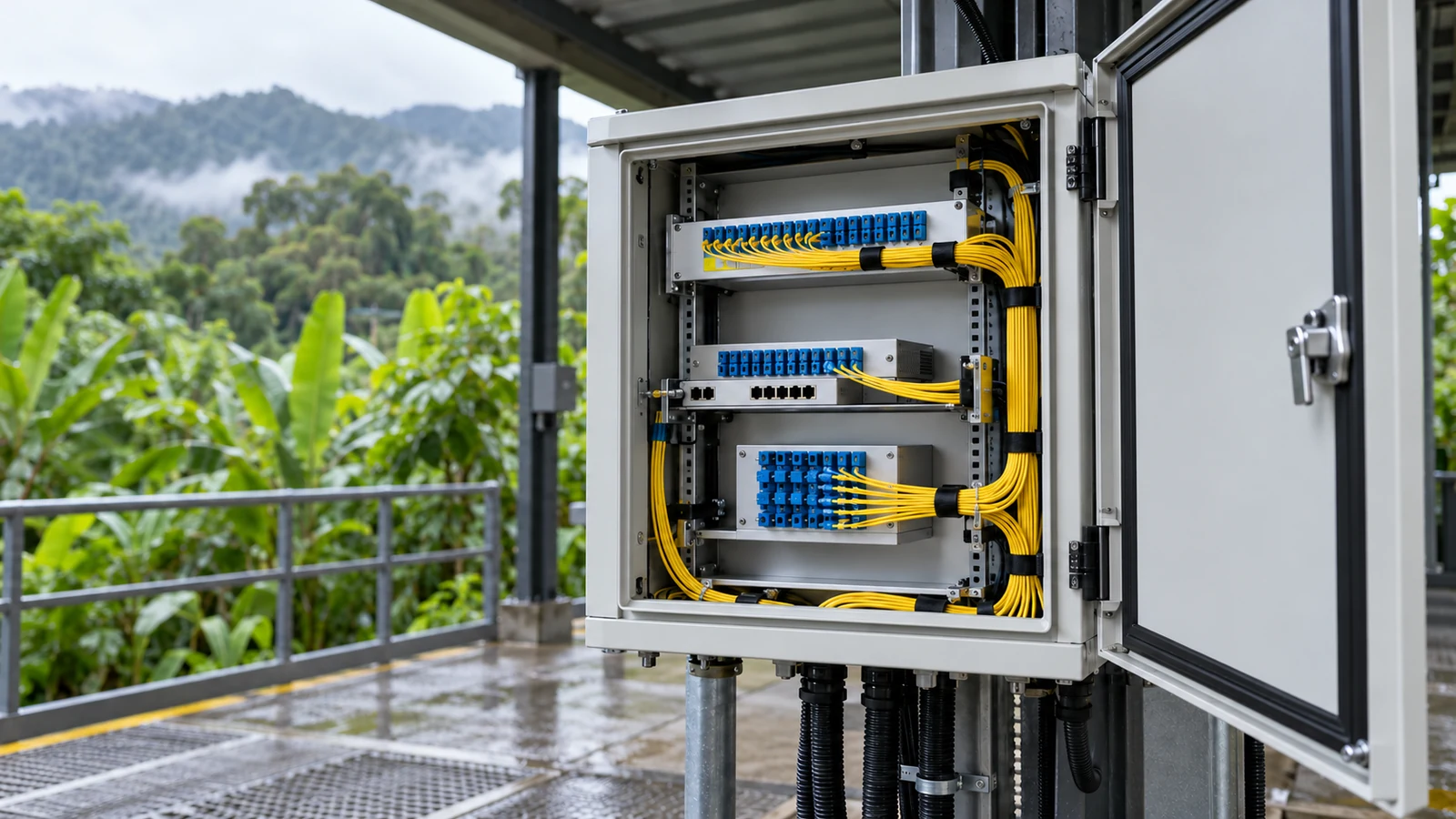
An outdoor cabinet creates its own operating environment. Weather exposure, solar heating and the equipment inside can make conditions very different from a nearby weather reading. Select the converter, optics, power supply and enclosure as a system.
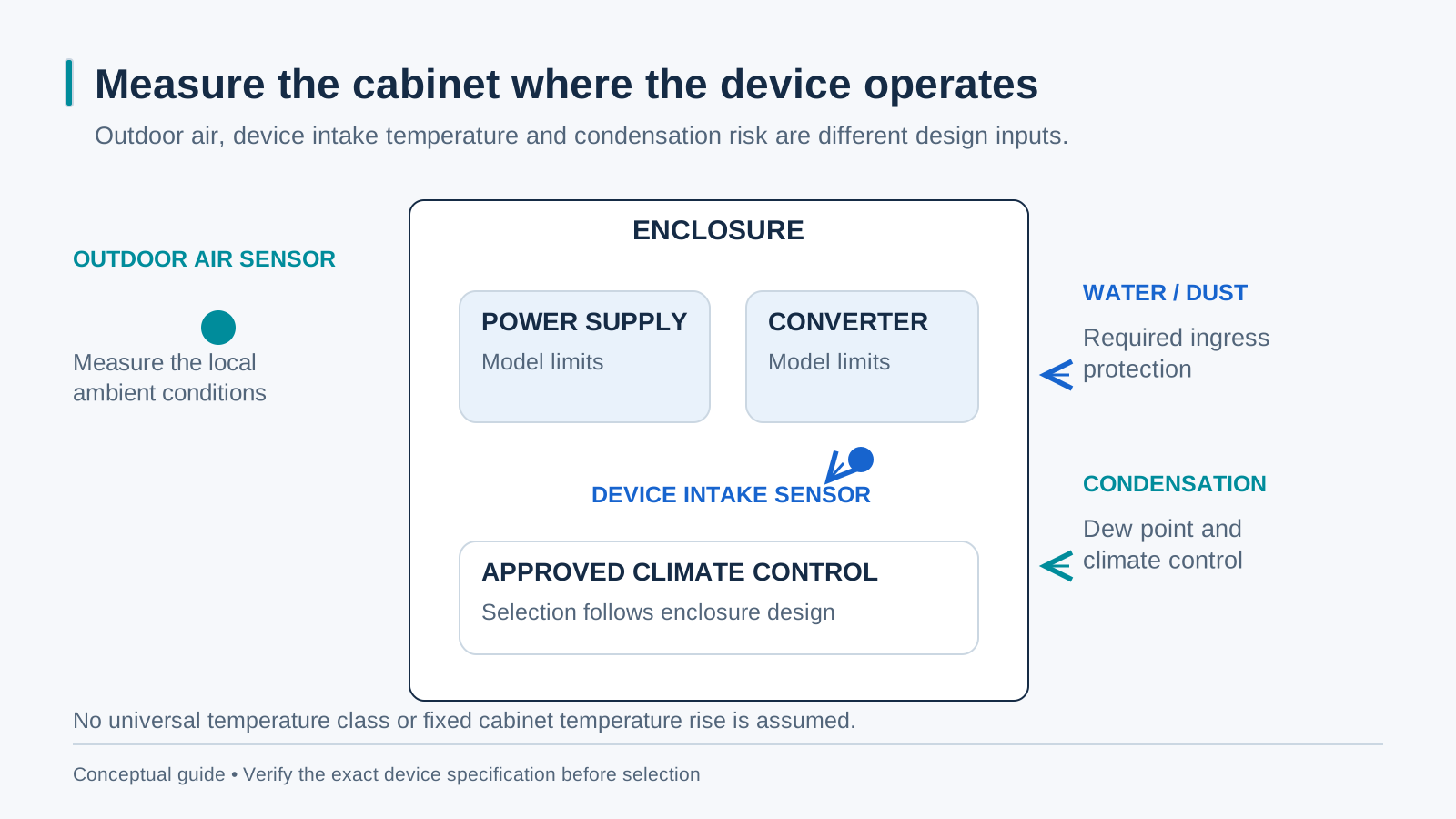
Measure the temperature at the equipment
Record the expected minimum and maximum temperature where each device is mounted, including operation at full load. There is no universal temperature range for “commercial” or “industrial” equipment. Use the exact model's operating limits and installation requirements, and check the power supply and optical module separately. Published manufacturer ranges vary even within one product family.
Allow the specified clearances, follow the approved mounting orientation and assess whether shading or enclosure cooling is needed. Do not assume a fixed temperature rise or use an outdoor air temperature as the equipment's temperature.
Treat condensation separately from ingress protection
Water can condense when a surface falls below the local dew point. An IP rating describes tested enclosure protection; it is not a promise that condensation cannot form inside. A “non-condensing” humidity specification means the equipment must operate without condensation.
Use an enclosure design suited to the site. Depending on the application, this may include controlled heating, cooling or an approved pressure-compensation system. Any drain or vent must be selected and installed as part of the enclosure design. Drilling a hole or turning a device vertically does not establish protection against moisture. For coastal exposure, request evidence of the required corrosion protection rather than assuming a coating is present.
Check power under the actual conditions
Confirm input voltage, polarity, connector, available current and power-supply derating. A wide DC input range does not by itself provide surge immunity or backup power. Select grounding, surge protection and any backup supply for the site's electrical design.
Before ordering, prepare the measured enclosure conditions, load list and power arrangement. Ask the supplier to identify suitable models and state any installation limits in the quotation.